
YIMBYism Does Not Scale
The push by Abundance liberals to make the "Yes In My Backyard" movement their guide for national economic policy is a recipe for Democratic disaster.

Yesterday morning, Donald Trump took to Truth Social to declare, “Powell’s termination cannot come fast enough!” Just when you thought we might have something resembling a normal week on Wall Street, the President pushes for terminating the Chairman of the Federal Reserve, a nonpartisan position beyond the hiring and firing powers of the Executive Branch. Compared to the psychotic tariff schemes that triggered market bloodbaths in previous weeks, Trump’s bullying of a cautious Fed chairman felt relatively tame, almost a nostalgic throwback to his first term. But the threat of Trump overreaching his Constitutional powers to fire Jerome Powell serves as an unwelcome reminder that we remain in an era of economic uncertainty on par with the worst crises in living memory. Earlier this week, while discussing the international trade war stoked unilaterally by Trump, billionaire hedge fund manager Ray Dalio warned, “I’m worried about something worse than recession.”
With Trump’s wolves of austerity and economic anxiety howling at the door of average Americans, it is no surprise that much of the Democratic Party has pinned its hopes on an Abundance Agenda as the message needed to reclaim Congress and the White House. Unfortunately, anyone who has taken the time to read Abundance by Ezra Klein and Derek Thompson will find that the main target of their critique is not kleptocratic Republicans torpedoing the economy with insane tariff schemes but well-meaning liberals whose interests in environmental, labor rights, and consumer protections stand in the way of growth and prosperity. If anything, MAGA will find a treasure trove of excuses in Abundance when Trump’s tariff plans inevitably fail. If onshore domestic manufacturing cannot build fast enough, Trump can take a page from Ezra Klein and Derek Thompson. He can blame the Endangered Species Act, prevailing wage requirements, and consumer rights activists for impeding the construction of American iPhone and Nintendo factories, instead of admitting that closing our country off to world trade while slashing public spending is tantamount to economic suicide.
To understand why the Abundance Agenda is so steeped in liberal self-flagellation, it is worth looking deeper into the YIMBY movement that seems to be the primary inspiration behind Klein and Thompson’s book. An acronym of “Yes In My BackYard,” the YIMBY movement gained strength during the worsening housing crisis of the 2010s, promoting policies that facilitated the construction of homes and public transportation. YIMBY was coined as a counter position to the older term NIMBY (No In My BackYard), an epithet thrown at residents who routinely use legal and political channels to block construction of socially beneficial projects within the vicinity of their homes. While YIMBYs wear their self-appellation as a badge of pride, very few self-described NIMBYs exist, as the term is usually thrown at liberals who claim to want affordable housing and public transportation just so it isn’t constructed in a way that inconveniences their day-to-day life, lowers their property values or threatens any of their pet causes like protecting endangered species or preserving green spaces. YIMBYism has therefore always had a moralizing flavor to it, seeking to dispel the ethical and intellectual flaws in fellow liberals that prevent large-scale growth and building. The word “Abundance” has been a YIMBY catchphrase long before Ezra Klein and Derek Thompson made it the title of their book. Yet while most YIMBYs focused their efforts on the municipal level, Klein and Thompson have sought to scale the liberal-on-liberal guilt tactics of the YIMBY movement to a national level, promoting a comprehensive pro-growth deregulatory agenda that challenges Democrats to deprioritize environmentalism, consumer rights, and organized labor in favor of a “liberalism that builds.”
There is no doubt a time and a place for YIMBYism. As a renter in the San Francisco Bay Area for over a decade, I learned an expensive lesson in the upward redistribution of wealth caused by the failure to build enough affordable housing in expensive coastal cities. When returning home to Pittsburgh, my efforts to restore historical buildings and set up a nonprofit in the small river towns just outside the city limits have often been frustrated by pointless regulation and sluggish bureaucracy. There are places throughout America where we desperately need to fast-track housing and transportation projects to build a greener and more equitable country. Unfortunately for Klein and Thompson, the places where YIMBYism is most needed and most effective are in dense urban areas that are still firmly within the grip of the Democratic Party.
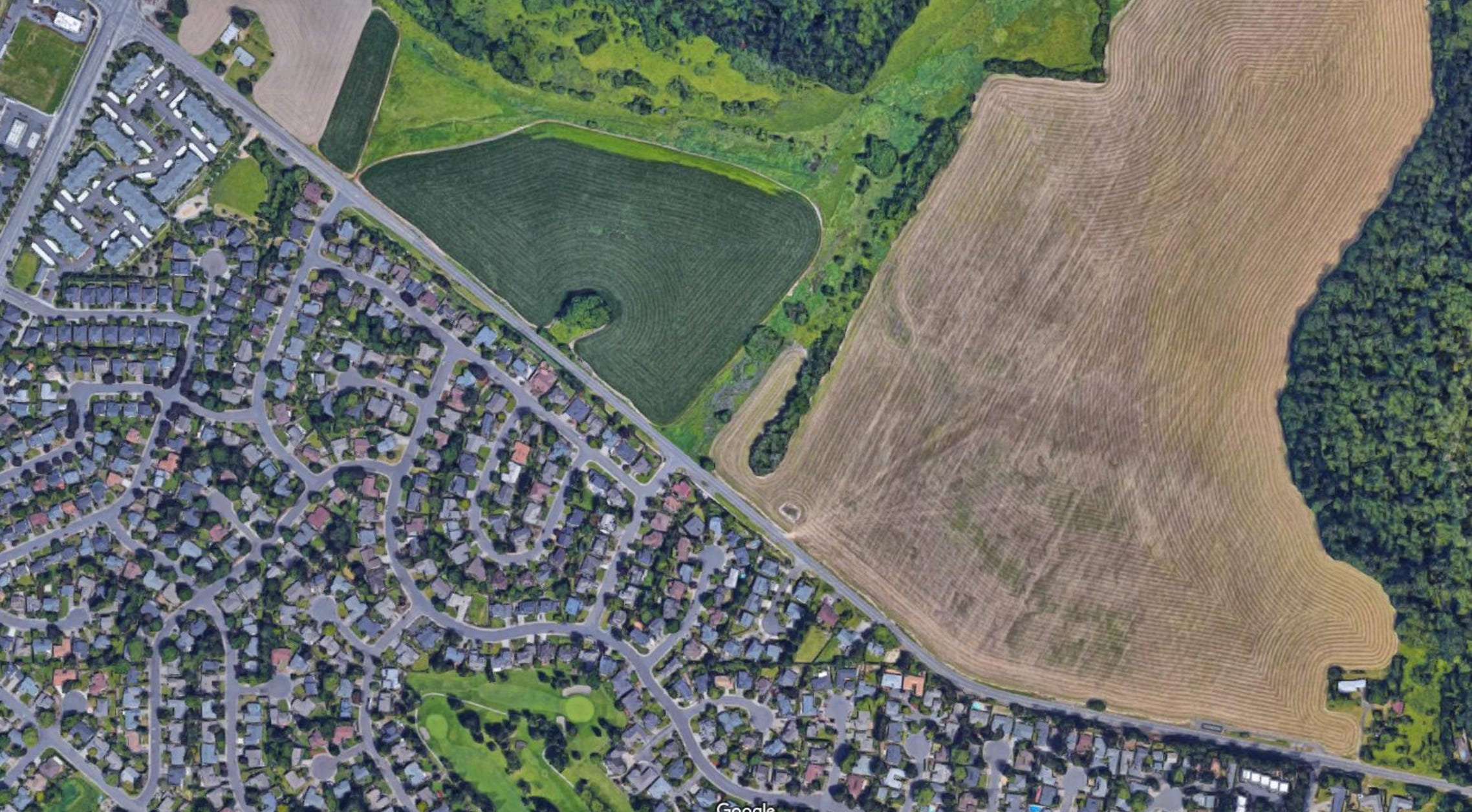
The limited appeal of YIMBYism became obvious to me when I began serving as an elected official in a township straddling the suburban-rural borderlands outside Pittsburgh. My district is deep purple, split almost 50:50 between Republicans and Democrats. Yet aside from two or three NPR-listening liberals plugged into the YIMBY movement from afar, nearly all of my constituents, whether they have Audubon bird sanctuary signs or Don’t Tread On Me Gadsden flags flying in their front yard, would be tarred with the label of NIMBY. They shout “No” to housing and fracking projects threatening the unique character of our community because they can see through the naked greed and duplicity of developers and frackers who try to browbeat our Board of Supervisors into changing the laws and making exceptions to our zoning, all to literally bulldoze the pristine forests that led so many of our residents to move here in the first place. Arguments made by these developers and frackers, often echoing the talking points of YIMBY Substackers, are met with boos. Developers sound like Noah Smith, imploring my community to help relieve the national housing crisis by approving plans consisting of $800,000 homes with no access to public transportation or social services in a county still suffering from a 30-year decline in population. Frackers sound like Matt Yglesias, talking up the need for an abundance of cheap energy to justify rezoning our township map so well pads can be put within a mile of our schools, subjecting our children to significantly increased rates of lymphoma and asthma. To the people of rural and small town America that Democrats need to win over, YIMBY arguments often sound like cowardly capitulation to corporate special interests at the expense of our own health and safety. Klein and Thompson’s attempt to scale YIMBYism to a national policy of the Democratic Party will only result in driving more Americans into the arms of the Republicans’ phony right wing populism.
In Abundance, Klein and Thompson give little thought or discussion to how their Abundance Agenda would resonate outside America’s elite urban centers. Part of this blind spot is attributable to Klein and Thompson being the quintessential out-of-touch liberal elites who have taken the Democratic Party from a respectable contender in rural America during Obama’s run in 2008, to a marginalized party confined to small clusters of blue within a sea of red on electoral maps. But the frequent disregard and occasional disdain for rural and small-town America is also essential to the New Urbanist philosophy that animates both YIMBYism and the Abundance Agenda. Ezra Klein articulates the New Urbanist creed in Abundance when he states, “Cities are engines of creativity.” Klein spends much of the opening chapters of Abundance promoting America’s most expensive cities as the drivers of our 21st-century economy that bring together tightly packed groups of experts, accelerating technological and financial innovation. In a sense, Abundance promotes a form of Trickle Down YIMBYism, where my small town and rural constituents must sacrifice the unique character of their community to developers and frackers so that housing and energy are cheaper in the parts of America that really matter, the elite urban centers that will improve all our lives with marvelous breakthroughs and inventions. It’s an argument that plays well to the liberal elites who made Abundance a bestseller, but it is complete rat poison when it comes to winning non-urban communities back into the Democratic fold.
To make matters worse, Klein’s New Urbanist glorification of expensive cities as engines of technological progress is contradicted by the second half of Abundance, where Thompson highlights the outsized role played by taxpayer-funded research in the greatest technological breakthroughs of the past half century. Thompson details the government-funded innovations that led to the development of smartphones, the internet, and artificial intelligence. Referencing Mariana Mazzucato’s The Entrepreneurial State, Thompson details how all the component pieces of the iPhone (GPS, the internet, touchscreen technology, microprocessors, voice recognition etc.) were created by the taxpayer-funded innovations of the Defense Advanced Research Projects Agency (DARPA). These innovations happened through DARPA funding and coordinating research in universities all across the country, with many of its greatest achievements spearheaded by Carnegie Mellon University, in Pittsburgh, less than a half hour’s drive from my house. Contrary to Ezra Klein’s New Urbanist myth that tech breakthroughs happen because the brightest minds cluster in a few expensive cities to bounce ideas off each other, new CMU graduates do not leave Pittsburgh in search of experts in artificial intelligence and computer science (Carnegie Mellon is the top rated AI program in the country); they leave in search of money. Unlike the chic cocktail bars in the Upper East Side or the Rosewood resort in Palo Alto, you won’t bump into deep pockets for VC funding in Pittsburgh. All our Gilded Age billionaires are dead and gone. It’s thirst for investment capital, not intellectual enrichment that has sucked top talent into a few elite urban centers. These Silicon Valley and Wall Street investors have taken advancements developed in places like Pittsburgh and turned them into devices for surveillance, harassment, self-inflicted brainwashing, and most importantly, tools for generating outsized profits benefiting a small sliver of the population. The past 50 years of skyrocketing housing costs in places like San Francisco and Manhattan (coinciding with a stagnation of American wage growth) suggest that elite cities have functioned as engines of wealth inequality more than engines of creativity.
What Abundance fails to realize is that the Democratic Party has not drifted toward irrelevance because of its inability to build, but because of its inability to stand up to moneyed special interests on behalf of the people. Sometimes, standing up for the people looks like YIMBYism, pushing against wealth-hoarding landowners who oppose developments to protect their property values. Sometimes standing up for the people looks like NIMBYism, fighting the frackers and developers who would endanger the health and wellbeing of a community in pursuit of profit. Prioritizing urban hubs over small towns and rural communities will only further marginalize the Democrats, reinforcing voting trends that led us to the economic dystopia that is the second Trump Administration. Sure, we need a liberalism that builds affordable housing and high-speed rail. But more than anything, we need a liberalism that builds trust in the American people that the Democratic Party puts their needs first above the interests of corporate elites.