
Inflation, Conflagration, Communication
Sifting through the ashes of the Biden presidency and the LA fires in search of new economic narratives.

He was the best of presidents. He was the worst of presidents. He was a president of elderly wisdom. He was a president of senile foolishness. He came to power during our spring of hope when vaccines promised to liberate us from the yoke of lockdowns and common sense leadership promised to save us from the dark forces of tyrannical insurrection. He will leave office during our winter of despair, knowing that his party lost “The Battle for the Soul of America” and that he failed in his primary goal of thwarting Donald Trump’s quest for a second term in the White House.
As the clock runs out on the final days of the Biden presidency, debates over his legacy already feel tired and stale. Biden will leave office with barely one-third of Americans approving of his job performance. The judgment of the American people seems overly harsh, especially in the eyes of political pundits and econ wonks who point to rosy numbers like 3.2% inflation, 4.1% unemployment, and 3% GDP growth. While his foreign policy record is mired by chaos from Afghanistan to Ukraine to Gaza, when it comes to domestic policy you can’t say Biden did not try to make the world a better place. On the economic and environmental policy front, no president in my lifetime has tried to do more good during his time in office than Joe Biden.
One of the cruel ironies of the Biden presidency is that his greatest legislative achievement, the Inflation Reduction Act, is named after the issue that undermined his administration more than any other, inflation. For right-wingers programmed to associate any government spending with inflation, calling the $891 billion spending package the Inflation Reduction Act was peak Orwellian newspeak on the part of Democrats. The mainstream financial press saw less diabolical intentions behind the Democrats’ naming of the Inflation Reduction Act but still regarded it as clever branding, an attempt to give Biden credit in the likely event that inflation would cool off from its 30-year high. Despite all the eye-rolling over the naming of the Inflation Reduction Act, there is a real connection between a green transition and taming inflation in the decades to come. It was a powerful story that needed to be told and a real opportunity to shift the narrative on the root causes of inflation. Unfortunately in 2022, this was a story the Democrats had never effectively told before and the man they had nominated for president in 2020 was completely incapable of telling it.
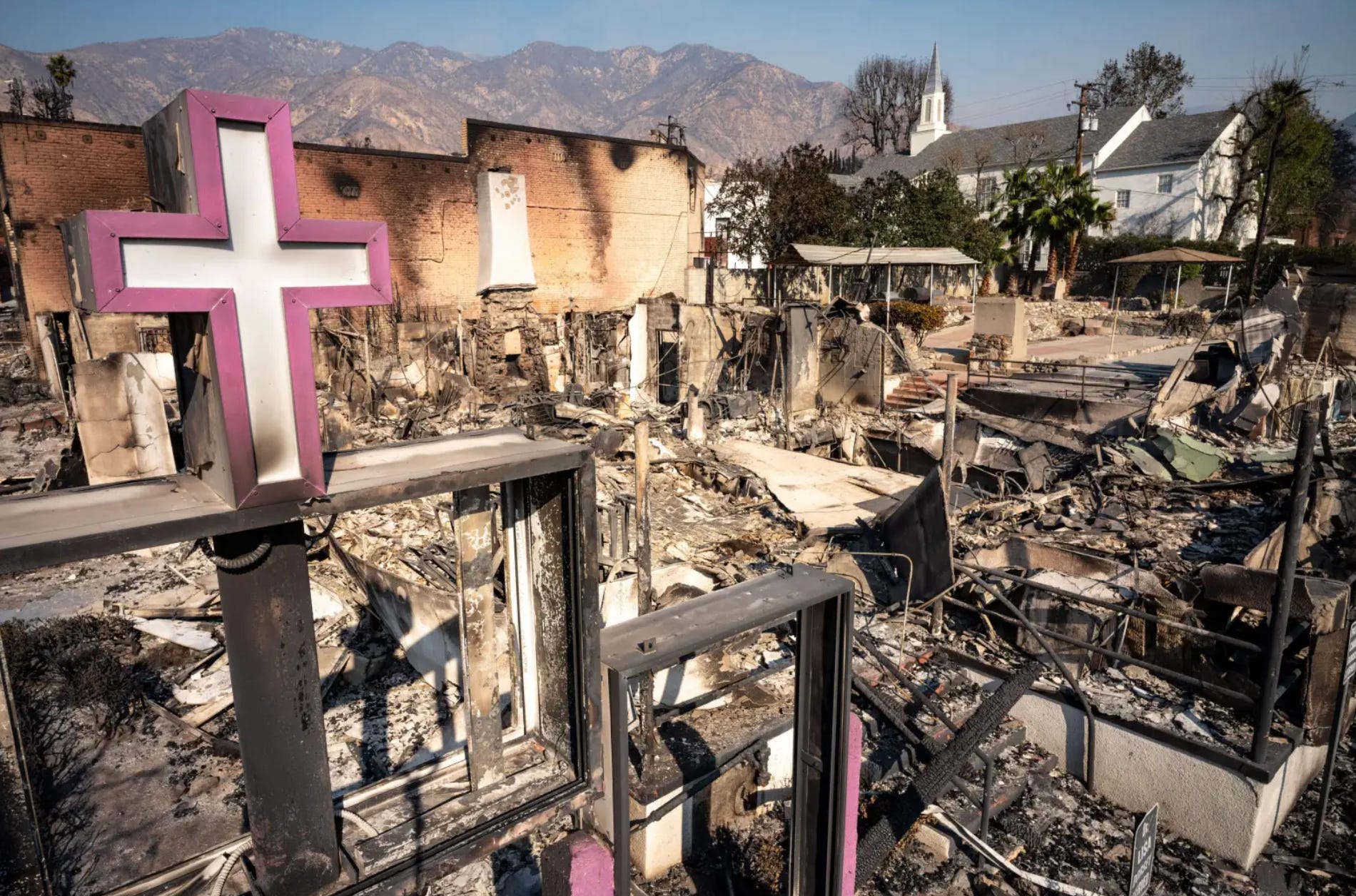
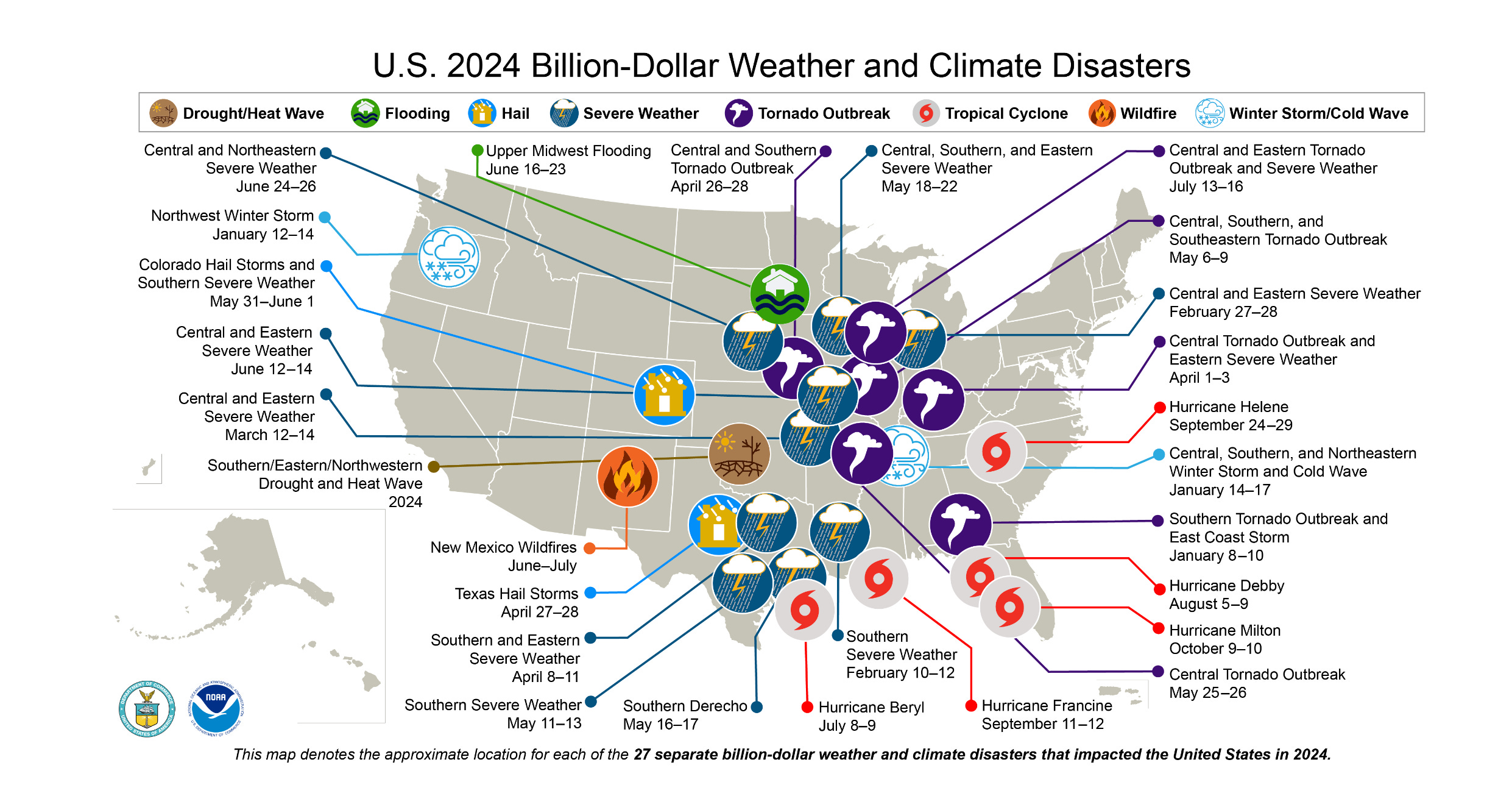
We only have to look at the charred aftermath of the wildfires that scorched Los Angeles County last week to learn a painful lesson about the inflationary shocks caused by climate catastrophe. Inflation is an economic phenomenon that is easy to notice (five dollars for a dozen eggs!) but complicated to explain. On a basic level, inflation describes a loss in the broad purchasing power of money, an imbalance between demand and supply where the growth in the number of people with the means to purchase goods outpaces the growth in the amount of those goods available for purchase. The dominant narrative in our Collusionist society is to point to the demand side of inflation, blaming average Americans for the rising prices and using increased interest rates, austerity measures, cutting off income supports, and breaking the power of organized labor to reduce the purchasing power of the populace. Yet the fallout from the LA fires will demonstrate the intense inflationary pressure caused by disasters that radically and suddenly destroy the supply of goods available. Preliminary estimates suggest the damage done by the fires could reach $250 billion. In a world where most wealth is just an entry on a digital ledger and insurance is available (for now), most of the victims of the fires will have an immediate desire to replace property lost in the disaster. Those looking to relocate to a new home will put inflationary pressure on an already pricey Southern California housing market. Those looking to rebuild will put inflationary pressure on an already strained construction industry. There will be increased demand and a diminished supply for everything from clothing, groceries, cars, etc. With respect to the impact on the price of home insurance, the question is not whether rates will skyrocket but whether private coverage will be offered at all in Southern California in the coming years. While the celebrity status of many fire victims has dampened public sympathy, the collective buying power of these victims only accentuates the potential inflationary pressure created by this natural disaster. In the past, we could say that these price pressures are geographically isolated and cannot be labeled “inflation” vis a vis the broader economy. Yet as climate instability creates devastation from hurricanes in Asheville and Tampa to record tornado outbreaks across the Midwest to bomb cyclones in the Pacific Northwest, natural disasters will be a primary driver of inflation in the decades to come.
Of course, this line of argument will be entirely unpersuasive to those who buy Donald Trump’s rhetoric that climate change is a hoax. They will crawl back into their cozy cocoon of skepticism, denying the link between human activity and climate change, choosing instead to blame Democratic politicians like Gavin Newsom and Karen Bass for failing to clear brush or prioritizing the protection of endangered smelt over keeping water on hand for fire suppression.
But even for these climate change skeptics, there is still an argument to be made for the disinflationary potential of a green transition. While skimming my local news feed, I noticed an article on Governor Josh Shapiro’s warning to Pennsylvania residents about significant increases in energy bills due to mismanagement by the state’s grid operator. On a personal level, I felt relief knowing that I recently purchased a solar array that covers my home’s electricity needs until I hit my mid-70s. The upfront investment was not minor, but the solar panels will pay for themselves several times over the next 30 years, even without hyperinflation in energy prices. The switch to solar power has effectively insulated me from price rises in one of the primary drivers of inflation: fossil fuels.
Had Biden and the Democrats had greater ambition and foresight, they could have sold Americans on the nationwide equivalent of the investment I made in my own residence, a rapid and aggressive expansion of solar power as the ultimate inflation killer. They could have used this anti-inflation argument to directly hire millions of Americans to build and install solar panels rather than rely on the Rube Goldberg Machine of policy that is the Inflation Reduction Act, a jumbled mass of grants to fragmented nonprofits and tax breaks on Collusionist boondoggles like carbon capture and hydrogen hubs, schemes that line the pockets of the very oil and gas companies that have spiked global temperatures and destroyed Americans’ trust in science through self-serving propaganda denying the link between carbon emissions and global warming. Had Democrats engaged American voters and convinced their own party leaders of a green transition’s power to fight inflation well before 2022, we could have had an Inflation Reduction Act worthy of its name and maybe even a policy successful enough to have kept Donald Trump out of the White House.
There are many causes of inflation. The measures we take to fight inflation reflect our broader policy priorities. We justify those priorities through narratives that must be disseminated throughout the general population before inflation strikes. When inflation spiked during the 1970s, Republicans were ready to go with free-market libertarian explanations that blamed the generosity of the New Deal state as the cause of rising prices. Nevermind the foreign policy intrigues leading to the Middle East oil crisis of 1973. Nevermind the staggering destruction of life and wealth caused by the Vietnam War, straining labor markets and industrial capacity. Nevermind that Nixon completely delinked the dollar from gold in 1971, with fiat money tied to nothing more than the waving of the Federal Reserve’s wand. By the mid-1970s the narrative that inflation was caused by poor people having too much money because of government largesse had won the day thanks to relentless free enterprise evangelism over the preceding three decades.
During the decades that followed, Democrats largely cosigned on that argument, from Jimmy Carter appointing inflation hawk Paul Volcker as chairman of the Fed to crush working-class consumption with 19 percent interest rates to Bill Clinton’s drive to balance the budget to Barack Obama claiming Washington needed to “tighten the belt” while Mainstreet still suffered in the aftermath of the 2008 Financial Crisis. It is therefore no surprise that once inflation roared back in 2022 Americans still regarded government spending on social programs as the primary driver of inflation and scoffed at the very idea of an $891 billion Inflation Reduction Act. Without Democrats having previously established a climate-based counternarrative on the causes of inflation, public support for the Inflation Reduction Act was doomed to fail and Biden’s legacy along with it.
In the smoldering ruins of the LA fires and the wreckage of the outgoing Biden administration, we must look for what little scraps of inspiration there are left to salvage. It is never too early to make the arguments that will win elections many years or even decades to come. The best way to honor Joe Biden’s legacy is to make the arguments for an inflation-fighting green transition that he could not make himself, given his state of cognitive decline and his party’s state of institutional decay. We must inspire Americans to make the bold upfront expenditures needed to ensure that future generations are not incinerated alive by wildfires or left to choose between paying their electricity bill and buying groceries. We must stand firm in our conviction that politicizing a climate disaster like the L.A. fires is a way to honor not disrespect the lives of the 25 souls who perished in the flames. Like Jimmy Carter, whose solar panels were torn off the White House roof by Ronald Reagan, we may someday come to recognize Joe Biden as a president who was ahead of time yet lacked the communication skills to convince the American people that he was the man to lead them to a better future. We cannot wait for the next Jimmy Carter or Joe Biden to arrive before getting to work in convincing Americans of the very real connection between rising prices and a warming planet. The hot Santa Ana winds will once again roar back to 100 mph. Egg prices will rise again. The threats posed by inflation and climate change are not going away. The question is, when the next crisis hits, will Democrats have established a convincing enough justification to enact the policies that can save both the planet and our pocketbooks in the process?