
After the Storm
If we can survive the unnatural disaster that is the second Trump administration, Democrats must prioritize long-term institutional rebuilding over quick fixes.

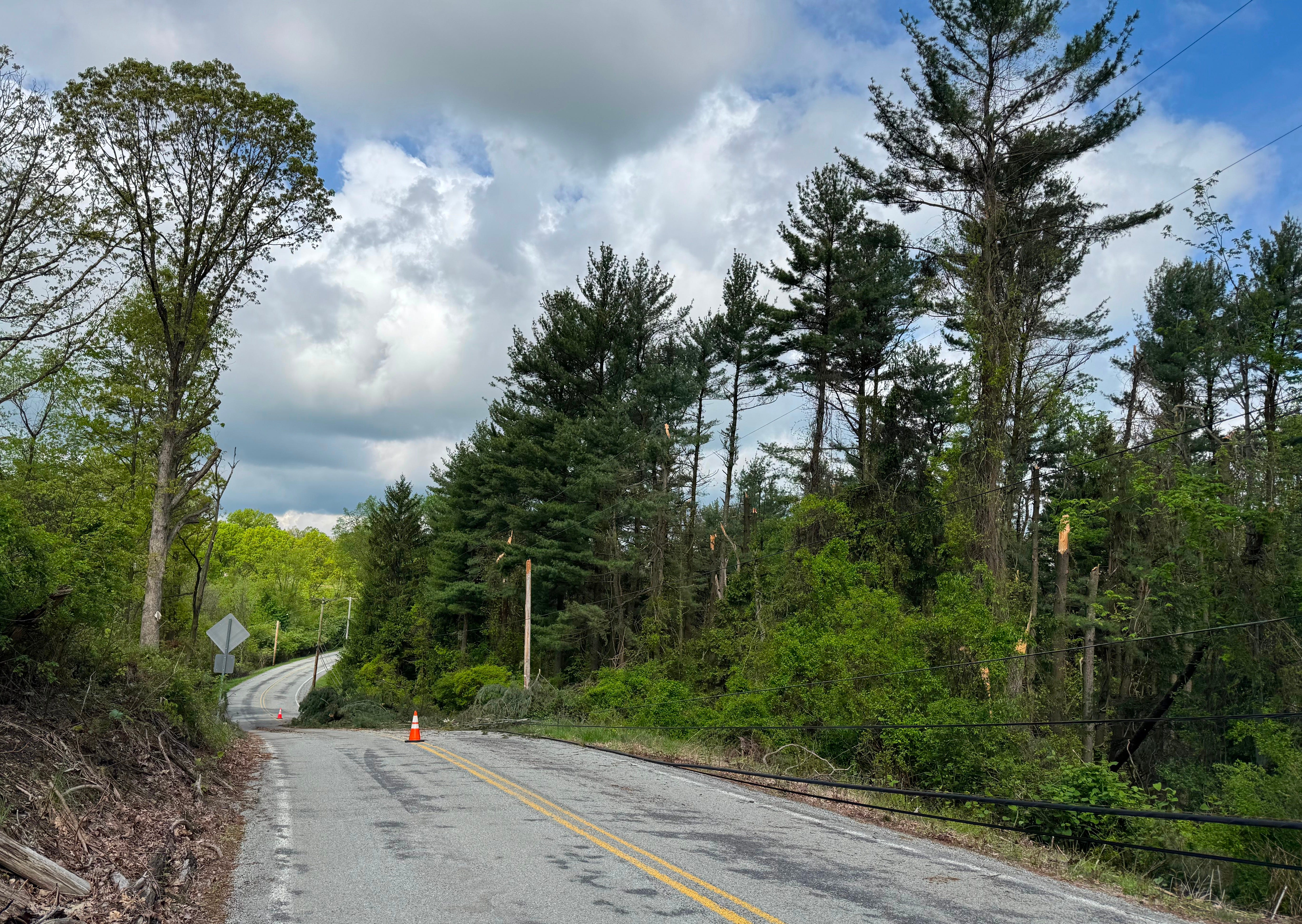
When I sat down to write this piece, it was Day 9 without electricity in my neck of the woods. On April 29th, severe storms packing winds of over 70 miles per hour tore through Western Pennsylvania, snapping utility poles like toothpicks, leaving over 400,000 residents without power. While most have been reconnected to the grid, many in my community remain without electricity, with residents seething at Duquesne Light, the only electricity provider in town.
Compared to my neighbors’ struggles, things have been relatively normal at my house. My lack of faith in our government’s commitment to combating climate change and maintaining infrastructure led me to purchase and install a solar array capable of sustaining us off-grid indefinitely. Other than earlier bedtimes, strategic flips of circuit breakers, and an unpleasant incident involving an overburdened sewer grinder system, life in my home has been relatively tolerable. This very Substack post was brought to you by the power of the sun itself.
Unfortunately, the rest of my community is waiting for Duquesne Light to dispatch workers who can erect new wooden poles and string our power lines back together, just like last summer when a severe storm left us without power for three days. Lately, the job of a Duquesne Light lineman has come to resemble Sisyphus, pushing the wooden utility poles upward only to have them knocked down by the next storm. Ideally, for both practical and aesthetic purposes, the power lines would be buried underground like in Germany or the Netherlands. But similar to the American healthcare system, our energy infrastructure often resembles developing countries more than our fellow OECD members. We lack the social trust, patience, and institutional competence needed to plan and execute long-term solutions to the tangled, inefficient patchwork of systems that bring electricity to the American people. The best we can hope for is to have the power company just reassemble the same fragile and ineffective configuration that provided us with electricity before the natural disaster hit. When you’ve gone over a week without power, just being able to flip the switch and see lights flash on again seems like a godsend. We are so elated by the meeting of our immediate needs that we stop thinking about our ongoing systemic vulnerabilities until the horizon darkens and the next menacing round of storms bears down upon us.
Lying in the dark every night has given me maybe too much time to think about the fragility of American civilization and convince myself of parallels between this devastating storm and what our country has endured in the first 100 days of Trump’s second administration. Just like the severe storm outbreak of April 29th that was preceded by ominous warnings from the National Weather Service, we heard for years about the authoritarian onslaught that would be coming if Trump were elected again. But once Trump was sworn in and a torrent of Executive Orders were unleashed, the Democrats seemed utterly unprepared, leaving many Americans feeling like there was nothing they could do but hunker down and wait for the storm to pass, hoping they would be spared from personal suffering, praying their friends and family would come out unscathed. While the storm is far from over, we seem to have weathered the initial blast of DOGE cuts, illegal deportations, and reciprocal tariffs. From federal judges to community activists to a select few members of Congress (e.g. Bernie Sanders), brave agents of resistance have emerged from their storm cellars, putting themselves in harm’s way to protect their neighbors, uphold the rule of law, and save their country. While we have no idea how damaged our institutions and economy will be at the end of these four long years, there is a growing sense of hope that we can survive this with an opportunity to rebuild.
When and if the Democrats return to power, there will be a strong temptation to make quick fixes to the damage inflicted by Trump, to merely get things back into the working order we were accustomed to under the Biden Administration. Like the Duquesne Light customers just grateful to flick on electricity provided to them by the rickety, fragile system of utility poles, voters will likely be initially satisfied with even a moderately competent Democratic administration, a government that will not cut their Social Security, will not claw back grants awarded by Congress, and will not openly defy the rulings of the judiciary branch. Yet these quick fixes to our damaged institutions will only get us by until the horizon darkens again.
Just like now is the time for Duquesne Light to begin planning to bury or reinforce power lines, now is the time for us to plan fixes for our American government that make it more resilient the next time a charismatic authoritarian like Donald Trump emerges on the scene. To do so, we need to confront the structural issues that fueled Trump’s victory in 2024: distrust in institutions and wealth inequality. Like a power grid composed of wooden poles propping up electrical lines that are sometimes weighed down by half-fallen trees, American institutions are hanging on by a thread while the American people feel the weight of financial vulnerability weighing down on them at all times.
To restore faith in American institutions and relieve economic anxiety, we need bold new plans that promote transparency, accountability, and resiliency. If there is a part of the American government that most resembles our convoluted and vulnerable energy grid, it is the United States Tax Code. Eliminating the income tax and replacing it with a progressive national sales tax paired with a wealth tax on all households with a net worth above $1 million would give Americans a clearer understanding of what everyone is contributing to the government and the confidence that wealth will not become so concentrated that the richest citizens can buy undue influence over our legal and political institutions. We must also compel the Democrats to finally back Medicare for All as part of the party platform. Americans have every right to wonder what good the Democrats are at all if the supposed “progressive” side of our two-party system cannot even be trusted to advocate for such a cost-effective and humane change to our increasingly predatory society. Finally, we need a Universal Job Guarantee as a shock absorber for unemployment caused by DOGE cutting the federal bureaucracy, AI replacing human workers, and market dislocations from an unhinged tariff policy. Like an app-based Works Progress Administration, a Universal Job program could enlist Americans to help in shovel-ready projects (like digging trenches to bury power lines) and provide photographic proof of work to a searchable database to reassure taxpayers that public money was being put to good use.
Sadly, I don’t have much faith that the Democratic Party in its current form would undertake bold new policies like ensuring every American has quality healthcare and meaningful work, or radically rewrite the tax code to make it simpler and more equitable. The chances of seeing the next Democratic administration enact such sweeping changes are probably much lower than Duquesne Light ever burying the power lines leading to my house. Over the past half century, Democrats have been reluctant to propose anything beyond the most incremental changes to our economic and political order.
That said, there is one relatively simple course of action that Democrats could take that would increase trust in our institutions but not require them to act boldly in reshaping our society: an unwavering commitment to fight corruption. For too long, Democrats have taken too much comfort in perceiving themselves as the less corrupt party. Of course, a sitting president throwing a dinner for top holders of his $TRUMP coin is more corrupt than any of the shady Arkansas land deals made by the Clintons before Bill became president. Sure, Eric and Donald Trump Jr. touring the world signing deals for the family’s business empire dwarfs any corruption involved with Hunter Biden’s forays in Ukraine or China. Yeah, Nancy Pelosi makes millions from suspiciously timed stock trades, but the same goes for Marjorie Taylor Greene. But what stalwart lesser-of-two-evils Democratic apologists overlook is that in the long run, any corruption from either party feeds the lack of trust that Republicans leverage to discredit and dismantle our public institutions. We need a new breed of Democrat who will call out and fight corruption regardless of the offender’s party affiliation. One name rapidly rising up the charts of potential 2028 Democratic Presidential contenders is Georgia Senator John Ossoff. Austin Wood’s recent profile piece characterizes Ossoff as a “warrior against corruption.” While Ossoff may not bring forth the transformational institutional change we need to restore true stability to our chaotic political landscape, his focus on integrity could go a long way to rebuilding America’s trust in its public institutions. Corruption fighting by the Democrats is analogous to Duquesne Light stepping up its customer service and response rates before the next storm. It may not be as effective as burying the power lines, but if it inspires renewed confidence in the integrity of those you depend upon, it is far better than merely restoring the status quo ante.
Around 3:00 AM this morning, I was awoken by air purifiers whirring, a robotic vacuum buzzing, and the security system beeping. Duquesne Light had finally restored our power. As the sun rose, the texts from neighbors and emails from the constituents I represent slowed to a trickle. Life felt normal again. When things have gone awry, nothing feels better than normal. But we should never forget how fragile a state normal really is, and how we must continually strive to sustain and improve the systems that maintain it. We can only dream of that sense of normal returning to our political world in 2029. We can only hope that once the Democrats regain power, they take a brief moment to appreciate this feeling of normality, and then get right to work building a new America that will be stronger at withstanding the next authoritarian storm to appear on the horizon.
I’m a new subscriber and so far so good. We seem to be on the same page on most issues. In this article and the previous one, you mentioned the need for a progressive national sales tax. As sales taxes are always described as regressive, I am intrigued by the concept of a progressive sales tax. I’m still binge reading your past posts so perhaps you explained this in an earlier article.
What a powerful metaphor! Even more powerful, perhaps, than the storm itself.
But for real, sorry that your area had to deal with this, and I can't imagine why burying the lines is so hard...it'd probably save the company money in the long run!